Adaptive Protocols Transform Table Game Access in Digital Casinos by Region
Alex Powell · Aug 21, 2026

Adaptive Protocols Transform Table Game Access in Digital Casinos by Region
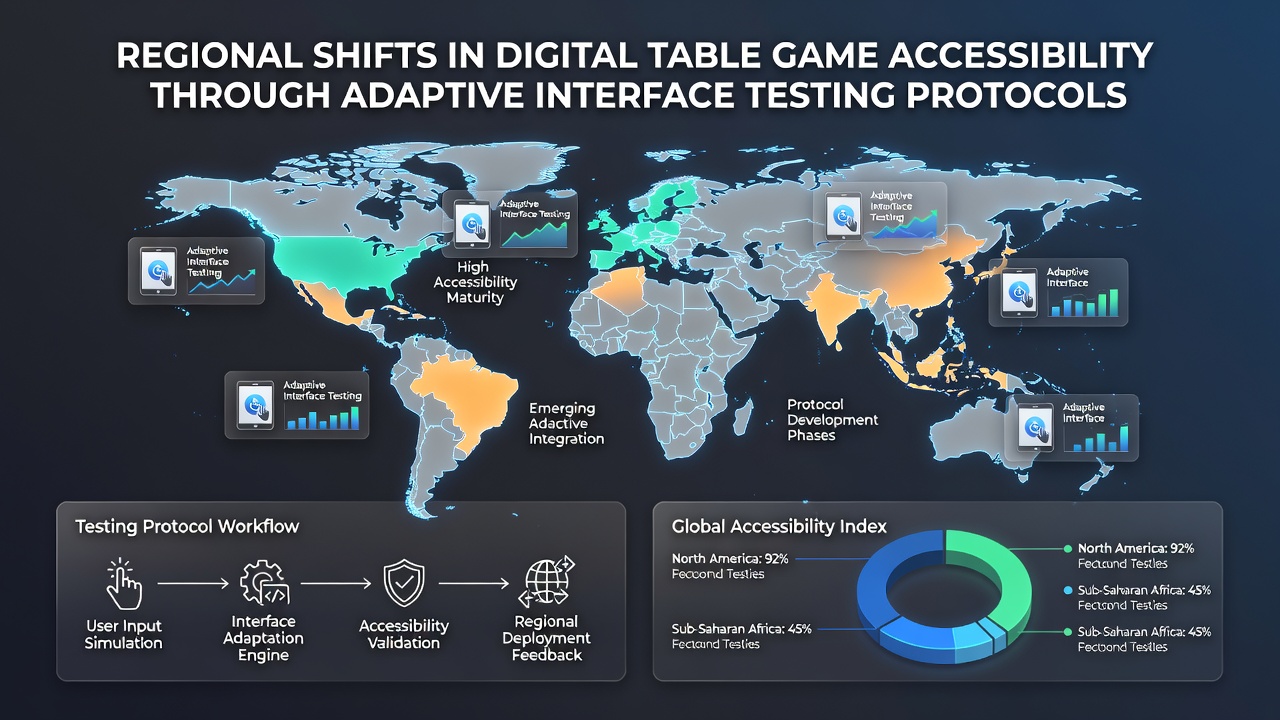
Regional differences in digital table game accessibility have accelerated since early 2025, driven by adaptive interface testing protocols that evaluate compatibility with screen readers, voice navigation, and customizable controls for users with motor or visual impairments. Data from industry reports indicate that adoption rates vary sharply between North America, Europe, and Asia-Pacific markets, with testing frameworks determining which platforms expand availability and which ones restrict access.
North American Developments
Operators in regulated U.S. states and Canadian provinces have integrated adaptive testing into compliance requirements, and figures from the Pennsylvania Gaming Control Board show that 68 percent of licensed table game platforms completed full accessibility audits by August 2026. These protocols assess real-time adjustments for contrast ratios, button sizing, and audio feedback while players engage with blackjack or roulette variants. One testing cycle in Ontario revealed that platforms passing adaptive trials increased player retention among users requiring assistive technology by 22 percent compared with non-compliant sites.
European and Asia-Pacific Patterns
European markets follow a different trajectory where the Malta Gaming Authority requires periodic interface validation against adaptive standards, resulting in broader rollout of voice-command features for table games across multiple jurisdictions. In contrast, several Asia-Pacific operators have adopted selective implementation, focusing protocols on high-traffic regions first. Research from the University of Sydney indicates that testing sequences in Australia and Singapore prioritize mobile compatibility, with data showing faster certification times when developers address regional language support alongside accessibility layers.
Testing Protocol Mechanics
Adaptive interface testing protocols combine automated scanning tools with human observation sessions that simulate varied user conditions, and the process typically includes stress evaluations under low-bandwidth connections common in certain rural areas. Observers note that successful protocols measure not only technical compliance but also the speed at which players can place bets or adjust settings without external assistance. Platforms that streamline these elements often secure approvals more rapidly, allowing operators to launch localized versions ahead of competitors still refining their interfaces.
Impact on Cross-Regional Availability
Shifts in availability appear most clearly when platforms that meet stringent adaptive criteria expand into new markets while others withdraw from regions with stricter validation demands. A case study involving a major provider demonstrated that passing multi-region testing in both North America and Europe enabled simultaneous launches in three additional jurisdictions during the first half of 2026. Meanwhile, operators relying on generic accessibility templates encountered delays when regional authorities required evidence of localized performance under adaptive conditions.
What's interesting is how these protocols intersect with existing regulatory timelines, and evidence suggests that jurisdictions updating their frameworks in August 2026 placed heavier emphasis on continuous monitoring rather than one-time certification. This approach has prompted developers to embed logging features that track interface adjustments during live sessions, providing regulators with ongoing data streams instead of static reports.
Future Trajectories
Continued refinement of adaptive testing is expected to influence which table game formats gain traction in emerging digital markets. Platforms that invest early in flexible control schemes tend to navigate regional shifts more effectively, while those using rigid designs face repeated revisions. Data compiled by the European Gaming and Betting Association highlights that collaborative protocol sharing between operators and testing labs has reduced average approval cycles by several weeks in compliant regions.
Conclusion
Regional shifts in digital table game accessibility continue to unfold through structured adaptive interface testing protocols that prioritize measurable user performance. As North American, European, and Asia-Pacific authorities maintain distinct validation paths, operators align development resources accordingly, producing measurable differences in where accessible table game options appear and how quickly they reach players.