Mapping Encryption Protocols Across Multi-Jurisdictional Gaming Platforms and Player Onboarding Sequences
Yara Griffin · Jun 24, 2026

Mapping Encryption Protocols Across Multi-Jurisdictional Gaming Platforms and Player Onboarding Sequences
Data moves through casino networks that span several regulatory zones where each segment applies distinct encryption standards to protect player information during verification and transaction stages, and observers note that these layers build sequentially rather than in isolation because operators must satisfy overlapping legal requirements from different authorities at once.
Core Encryption Layers in Network Architecture
Transport layer security protocols such as TLS 1.3 encrypt data packets while they travel between player devices and central servers, yet application-level encryption often wraps additional protection around sensitive fields like account details before they reach the transport stage, and database encryption at rest uses standards including AES-256 to secure stored records in jurisdictions where operators maintain physical servers. Researchers at institutions tracking gaming technology have documented how these overlapping layers prevent single-point breaches because an attacker who compromises one segment still encounters further barriers at the next stage.
Multi-jurisdictional setups introduce further complexity since data crossing from one region to another may trigger re-encryption under local mandates, and analysts point to systems that route verification requests through regional gateways where each applies its own key management policies before forwarding anonymized tokens onward.
Player Verification Workflows and Data Handling
Verification sequences typically begin when a player submits identity documents through an encrypted upload portal, after which optical character recognition tools extract data while it remains protected by end-to-end encryption that prevents intermediate servers from accessing raw images. Subsequent steps involve cross-checks against government databases where encrypted queries travel via secure channels, and findings return as hashed confirmations rather than full records to limit exposure.
Operators in regions including parts of North America and Europe coordinate these steps through shared frameworks that require real-time compliance checks, while data minimization principles guide how much information gets retained once verification completes. Figures from industry reports indicate that verification failure rates drop when encryption remains consistent across handoffs because fewer packets get rejected due to format mismatches during transfer.
Regulatory Influences on Encryption Standards
Authorities in different areas set baseline requirements that operators translate into technical controls, and the Alcohol and Gaming Commission of Ontario has published guidelines emphasizing key rotation schedules alongside audit trails for verification data. Similar expectations appear in Australian frameworks administered by state-level bodies where operators must demonstrate that encryption keys never leave designated geographic boundaries without additional safeguards.
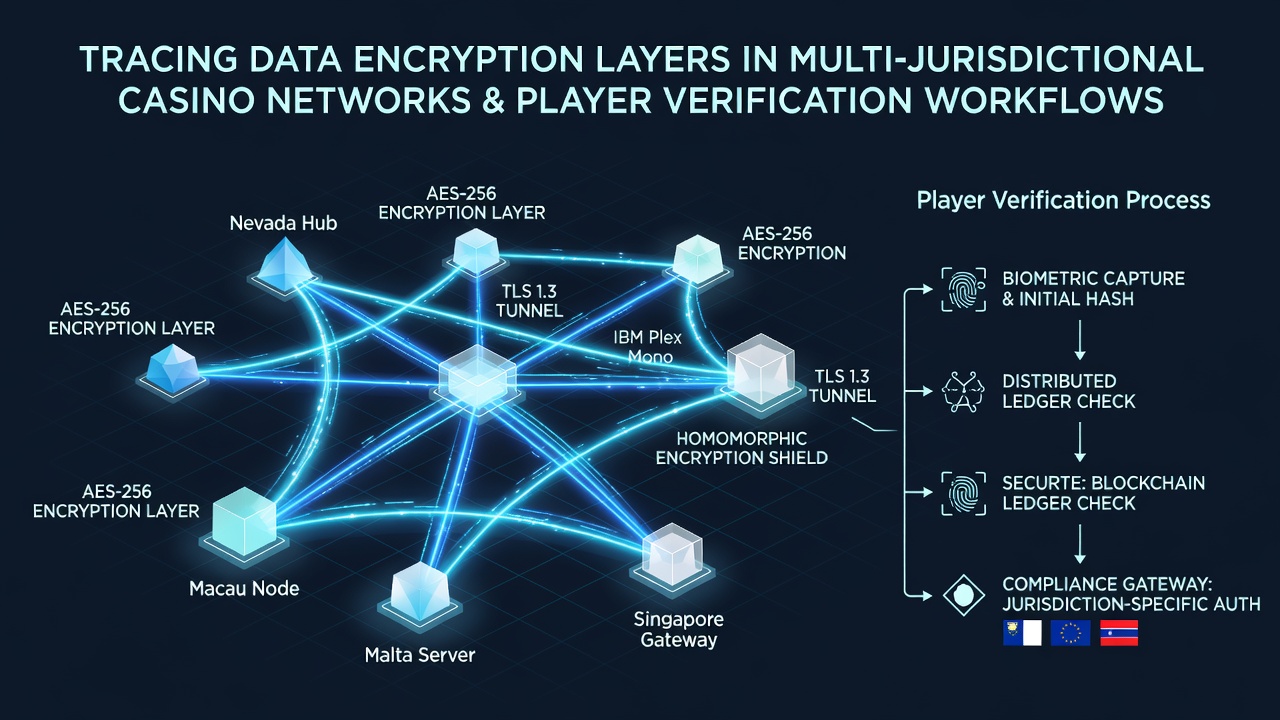
European directives on data protection intersect with gaming rules in ways that force operators to segment databases by player residency, and this segmentation itself relies on encryption zones that isolate records so that a breach in one jurisdiction does not automatically expose data tied to another. Data from academic studies on cross-border information flows shows that such segmentation reduces the scope of potential incidents while maintaining audit capabilities for regulators.
Technical Tracing Methods Used by Operators
Network monitoring tools trace encryption handshakes in real time, logging which protocols activate at each hop and flagging any downgrade attempts that could weaken protection during verification exchanges. Log aggregation systems collect these traces across multiple data centers so compliance teams can reconstruct the path a single verification request followed from initial upload through final approval.
Packet analysis at boundary points reveals whether regional gateways apply additional obfuscation layers before data proceeds to central processing hubs, and those who manage these systems often integrate automated alerts that trigger when encryption parameters deviate from expected profiles established for each jurisdiction pair.
Challenges in Maintaining Consistent Protection
Latency introduced by successive encryption and decryption steps can affect user experience during live verification, prompting operators to optimize key exchange mechanisms without lowering security thresholds. Jurisdictional updates that occur around periods such as June 2026 sometimes introduce new algorithm preferences that require rapid system adjustments across all connected networks to avoid service interruptions.
Interoperability testing between different encryption implementations remains ongoing because platforms must accommodate both legacy systems in older markets and newer standards adopted elsewhere, and coordinated efforts among operators help ensure that verification workflows continue without exposing intermediate data states.
Conclusion
Tracing encryption layers across multi-jurisdictional casino networks reveals a system built from successive protections that align with diverse regulatory expectations while supporting secure player verification at every step, and continued documentation of these flows assists operators and authorities in verifying that data remains shielded throughout its lifecycle.