Navigating Compliance Obstacles for Multi-Currency Live Dealer Platforms in Developing Regions
Alex Powell · Jul 1, 2026
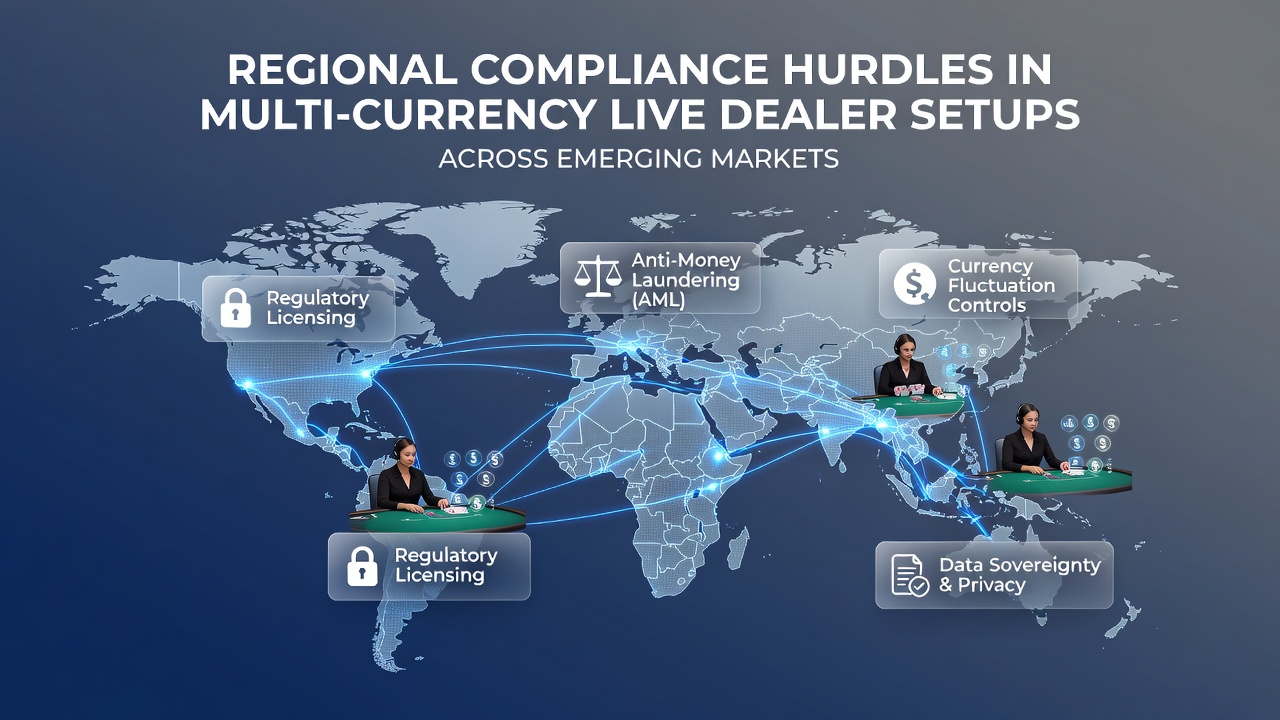
Navigating Compliance Obstacles for Multi-Currency Live Dealer Platforms in Developing Regions
Operators setting up live dealer studios in emerging markets face layered compliance requirements that shift sharply from one jurisdiction to the next, and multi-currency handling adds further technical and legal layers because each currency brings its own anti-money laundering thresholds, reporting cycles, and foreign exchange controls.
Regional Licensing Frameworks and Their Currency Implications
Countries across Southeast Asia, Latin America, and parts of Africa have introduced or revised licensing regimes for live dealer services between 2024 and 2026, yet the rules rarely align on how operators must segregate player funds when multiple currencies flow through the same platform, and observers note that currency conversion logs must often be retained for longer periods than standard transaction records.
In several Latin American markets, regulators now require real-time reporting of large foreign-currency bets to central banks, while Southeast Asian jurisdictions focus more on local currency stability and may impose caps on the percentage of revenue that can be held in offshore accounts, and these differences force studios to maintain separate ledger systems rather than a single unified database.
Technical Infrastructure Demands in Multi-Currency Environments
Live dealer platforms stream video and accept wagers in real time, so the software must reconcile exchange rates at the moment each bet is placed, and data protection laws in many emerging markets require that both video feeds and currency ledgers stay within national borders or approved data centers, which creates added latency and cost for operators who need sub-second settlement across currencies.
Research from academic institutions tracking digital gaming infrastructure shows that platforms operating in more than three currencies experience a measurable increase in reconciliation errors during peak hours, and those errors trigger mandatory audits that can halt new market entry until corrected.
Anti-Money Laundering and Player Verification Overlaps
Emerging-market regulators frequently tie currency licensing to stricter know-your-customer rules, and because live dealer games allow rapid deposit-withdrawal cycles, operators must apply enhanced due diligence whenever a player switches currencies mid-session, and this requirement has led several jurisdictions to mandate biometric verification tied directly to each currency wallet.
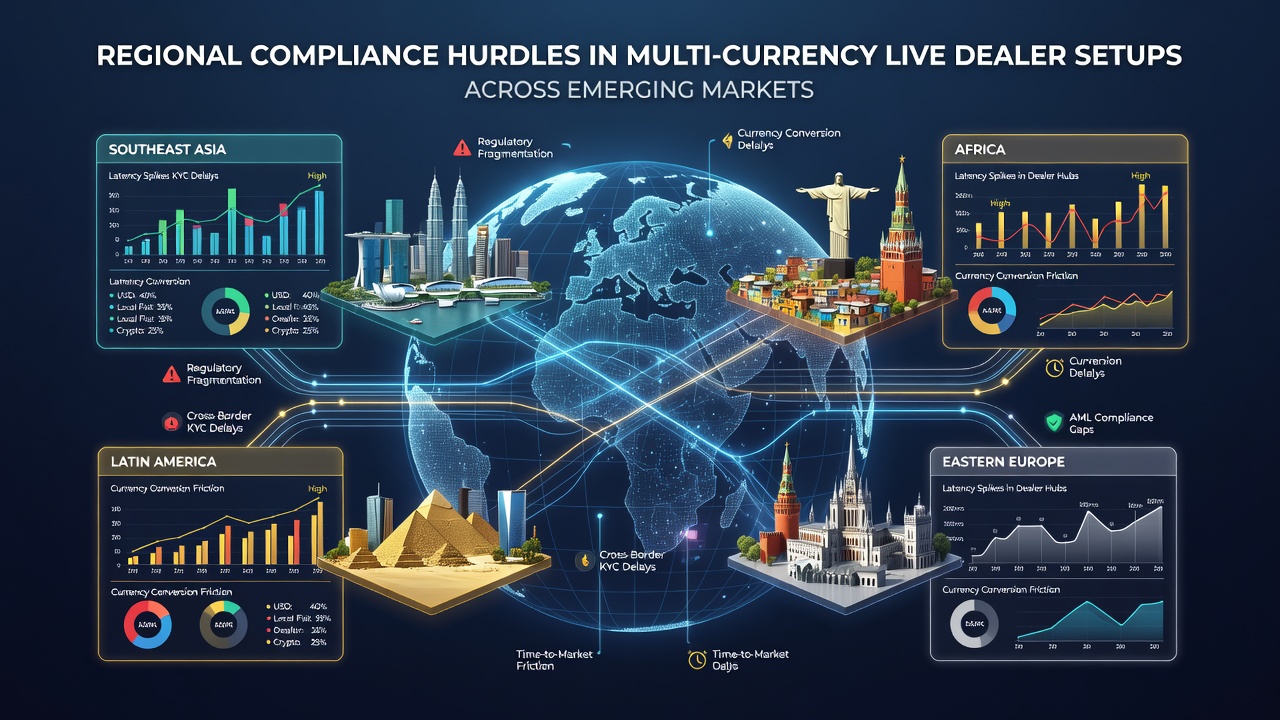
By July 2026, at least two major African gaming authorities had begun cross-checking player identity data against regional financial intelligence units before approving any multi-currency live dealer license, and similar coordination efforts have appeared in Latin American trade agreements that link gaming oversight with broader financial crime prevention networks.
Case Examples of Operational Adjustments
One studio group that expanded into three Southeast Asian markets in early 2025 found it necessary to deploy separate banking partners for each local currency while still routing all video streams through a central compliance server, and the arrangement satisfied local data-residency rules without violating foreign-exchange reporting deadlines.
Another operator working across two Latin American jurisdictions implemented automated alerts that flag when cumulative bets in any single currency approach regulatory thresholds, and those alerts feed directly into both internal risk systems and the required government portals, reducing manual filing time by nearly half according to internal metrics shared with industry associations.
Conclusion
Mapping these compliance hurdles reveals that success in multi-currency live dealer setups depends on building modular systems capable of adapting to shifting local rules on licensing, data location, currency controls, and player verification, and operators who treat each emerging market as a distinct regulatory environment rather than a uniform region tend to complete licensing cycles more efficiently while maintaining uninterrupted live streams.