Server-Side Randomization Protocols Deliver Consistent Fairness in Browser-Based Slot Games
Klara Koch · May 29, 2026
Server-Side Randomization Protocols Deliver Consistent Fairness in Browser-Based Slot Games
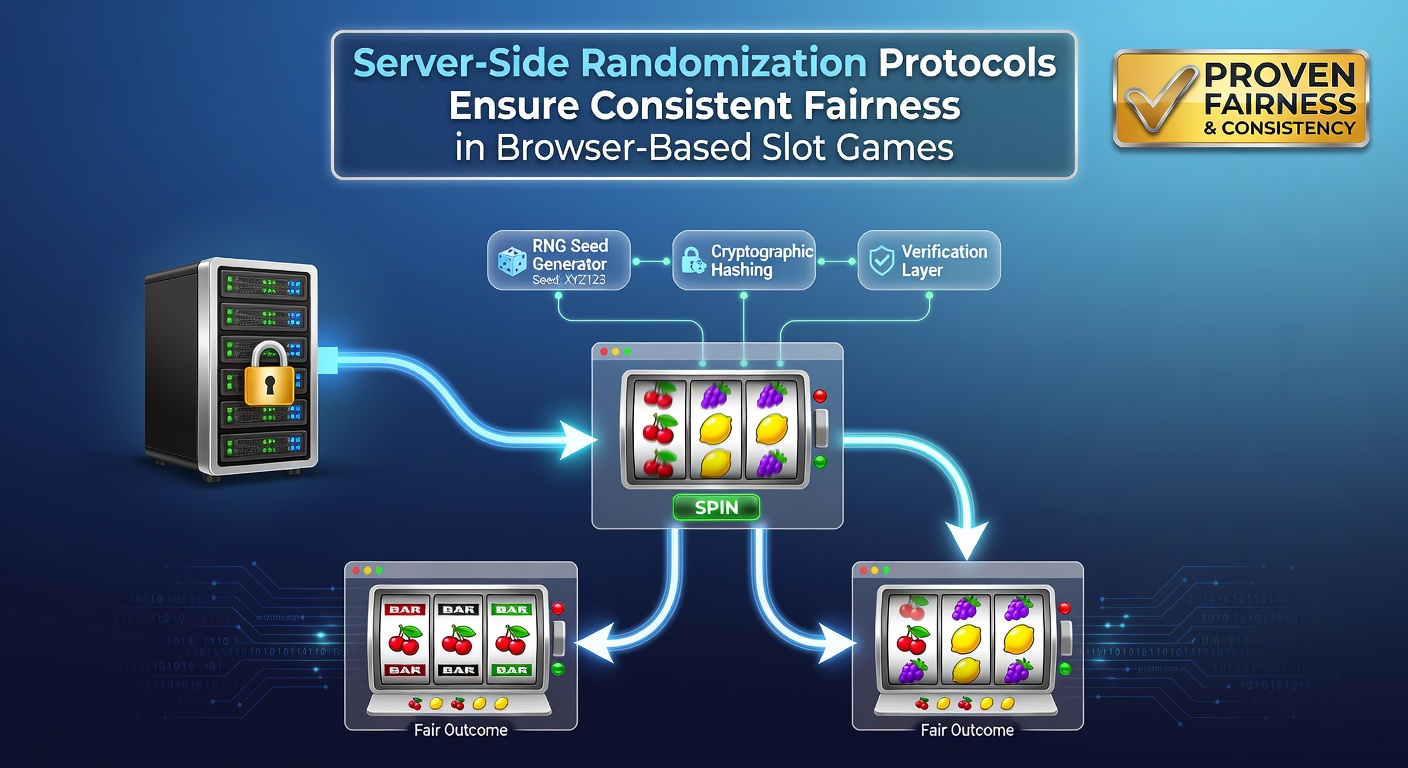
Browser-based slot games rely on server-side randomization protocols to generate outcomes that remain independent of player devices and network conditions. These systems process random number generation on remote servers rather than within the browser environment itself and this separation reduces opportunities for manipulation while maintaining consistent results across sessions.
Core Mechanics of Server-Side Random Number Generation
Developers implement cryptographic algorithms on centralized servers to produce sequences that determine reel positions and symbol combinations. The process begins when a player initiates a spin and the browser sends a request to the server which then executes the randomization function and returns the result for display. Algorithms such as those based on AES encryption or SHA-256 hashing create outputs that pass statistical tests for uniformity and unpredictability according to standards set by testing laboratories.
Multiple independent seeds combine with timestamps and player identifiers to produce each outcome and this layering prevents patterns from emerging even during extended play periods. Servers store the generated values in secure logs that auditors can review later and this record-keeping supports verification that every result aligns with the expected probability distribution for the game.
Regulatory Oversight and Certification Processes
Authorities in various jurisdictions require operators to submit their randomization systems for evaluation before deployment. The Nevada Gaming Control Board conducts periodic reviews of server configurations while the Malta Gaming Authority examines similar protocols for operators licensed in its region. Certification bodies perform thousands of simulated spins during testing phases and confirm that return-to-player percentages match advertised figures within narrow tolerances.
Data collected through May 2026 shows that certified systems maintain deviation rates below 0.01 percent across millions of trials. Operators must renew certifications annually and any changes to the randomization code trigger fresh audits to preserve compliance. These requirements create a framework where browser-based slots operate under the same scrutiny applied to land-based machines.
Protection Against Client-Side Interference
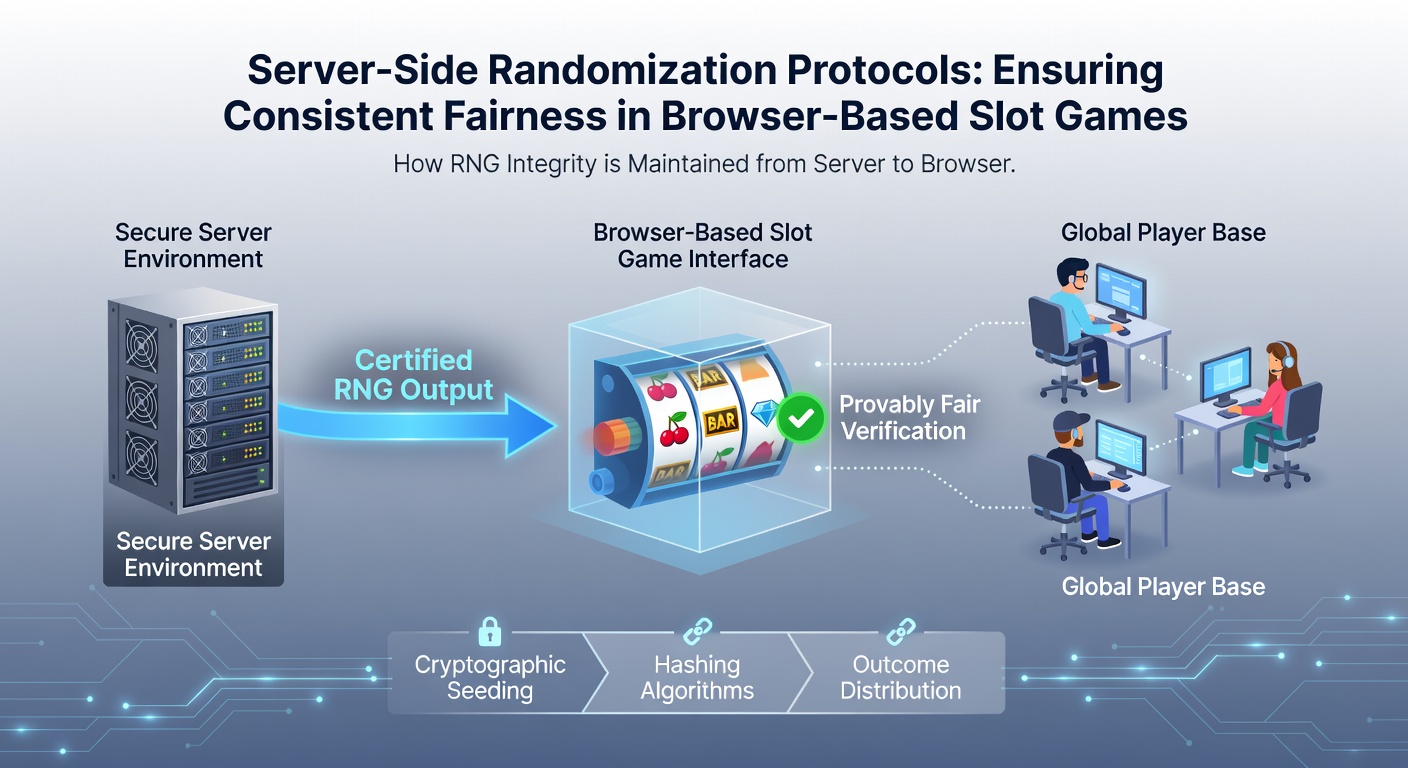
Running randomization on the server eliminates risks associated with browser extensions or local scripts that might attempt to influence results. The client receives only the final outcome data which the interface renders as spinning reels and this one-way communication prevents reverse engineering of the generation process. Encrypted channels transmit requests and responses while session tokens expire quickly to block replay attacks.
Researchers at institutions including the University of Nevada Reno have documented how distributed denial attempts fail against properly configured server architectures because the core computation never reaches the user device. Updates to security protocols occur on the server side without requiring players to download new software and this central control allows rapid response to emerging threats.
Integration with Real-Time Monitoring Systems
Operators deploy continuous monitoring tools that track randomization outputs against expected distributions in live environments. Alerts trigger when statistical anomalies appear and technicians investigate server logs to determine whether hardware faults or software issues require correction. These systems operate alongside player activity records and enable identification of unusual betting patterns that might indicate external interference attempts.
Industry reports from the European Gaming and Betting Association highlight how such monitoring has identified isolated cases of network latency affecting result delivery yet the underlying randomization remained unaffected. Adjustments to server load balancing preserve fairness even during peak traffic periods and maintain consistent performance for users across different geographic locations.
Future Developments in Protocol Design
Advances in quantum-resistant cryptography are entering testing phases for slot platforms and these enhancements aim to future-proof server-side systems against evolving computational capabilities. Pilot programs launched in early 2026 explore integration of verifiable random functions that allow independent third parties to confirm outcome integrity without accessing proprietary code. Browser compatibility updates ensure that newer web standards continue to support secure connections to these randomization servers.
Conclusion
Server-side randomization protocols form the foundation for equitable play in browser-based slot games by centralizing outcome generation and subjecting it to rigorous external validation. Regulatory frameworks across multiple regions enforce ongoing compliance while technical safeguards protect against device-level tampering. Continued refinement of these systems supports reliable performance as player volumes and technological landscapes evolve.